
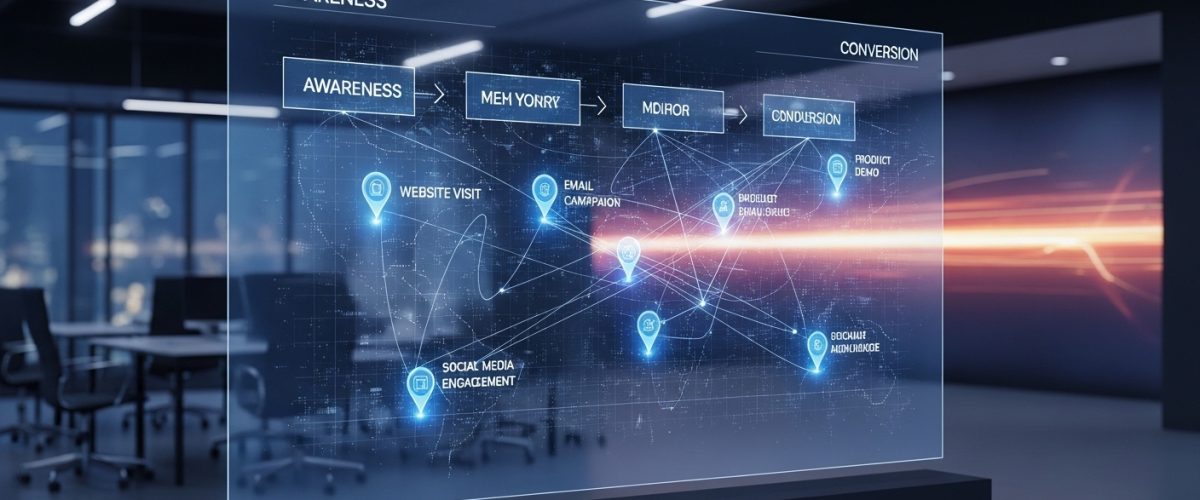
Modern digital marketing strategy must revolve around the customer journey. Buyers do not progress in a straight line from awareness to purchase; they move through multiple stages, each requiring targeted messaging that aligns with their mindset and needs. Understanding these stages ensures that every interaction supports the progression from interest to action, rather than leaving prospects confused or disengaged.
Early-stage audiences, still discovering a need or identifying a problem, require educational content that builds awareness and provides value. This could include blog posts, videos, guides, or social content that introduces concepts and solutions without a hard sell. Mid-stage prospects, evaluating options, require proof, differentiation, and validation. Case studies, testimonials, comparison guides, and detailed product information help them assess credibility and choose confidently. Late-stage buyers, ready to act, need clarity and assurance — clear offers, simplified decision-making, and frictionless experiences that make conversion easy and risk-free.
Mapping the digital journey allows marketers to identify friction points. Where do users abandon the funnel? What questions remain unanswered? Which touchpoints are underperforming? Answering these questions informs content creation, landing page design, and follow-up systems, ensuring each step nudges prospects closer to conversion.
Personalization strengthens this strategy further. Behavioral data, such as past interactions, browsing patterns, and purchase history, enables tailored messaging that resonates with individual preferences and intent. By delivering relevant content at the right time, brands create meaningful connections and increase engagement.
When strategy aligns with the customer journey, marketing feels purposeful rather than intrusive. Audiences receive the right message for their stage of awareness, which builds trust and reduces friction. This relevance drives higher engagement, stronger conversion rates, and ultimately, measurable business results. Digital marketing, when structured around the journey, becomes more than just campaigns — it becomes a guided experience that consistently moves prospects toward action.